
(VALENCIA COUNTY, N.M.) — A New Mexico man has been diagnosed with plague, marking the state’s first human case this year, according to local health officials.
The patient, a 43-year-old man from Valencia County — located just southwest of Albuquerque — was hospitalized with the condition but has since been discharged, the New Mexico Department of Health (NMDOH) said on Monday.
Recently, the patient had been camping in Rio Arriba County, which borders Colorado, where health officials believe he may have been exposed.
No other identifying information about the man was available, including his name or race/ethnicity.
“Many people think of this as a disease of the past, but in fact, it circulates in wildlife throughout the western U.S.,” Dr. Erin Phipps, state public health veterinarian for NMDOH, told ABC News. “We’re not seeing an unusual pattern at this point, but it is an important reminder that plague does circulate in New Mexico … so awareness is important for people to take measures to protect themselves.”
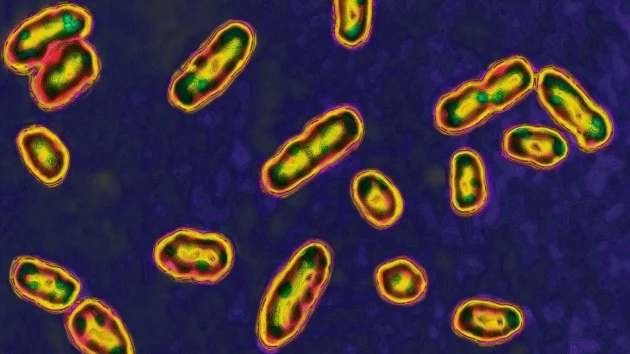
Plague is a disease caused by the bacterium Yersinia pestis. It naturally occurs in areas of the western U.S., according to the Centers for Disease Control and Prevention (CDC),
It typically affects wild rodents including wood rats, rock squirrels, ground squirrels, mice, prairie dogs and chipmunks, the CDC said.
Humans can contract the disease after being bitten by an infected flea, coming into contact with contaminated fluid or tissue from an infected animal or by inhaling infected droplets in the air.
The CDC notes that person-to-person spread of plague has not been documented in the U.S. since 1924.
In recent decades, an average of seven human plague cases have been reported each year, according to the CDC.
There are three types of plague: bubonic plague, which is associated with enlarged lymph nodes called buboes; septicemic plague, which occurs when the bacteria enter the bloodstream; and pneumonic plague, which is when the infection enters the lungs.
Phipps said the New Mexico patient had both septicemic and bubonic plague including inflamed, painful lymph nodes and a blood infection.
Common symptoms of all three include headache, fever and weakness, according to the CDC.
Phipps said it can be difficult to diagnose a patient quickly because symptoms can resemble other diseases.
“It can be very difficult to diagnose someone promptly,” she said. “If a person has the bubonic form of plague — plague with that inflamed lymph node — that can point a clinician in the correct direction pretty quickly. However, if somebody has a septicemic or pneumonic plague without the enlarged lymph nodes, that initial presentation can resemble many other diseases, and that’s one of the challenges that we see in terms of getting someone on the appropriate treatment.”
“It’s critical for someone to be treated promptly, because plague can be fatal very quickly,” Phipps added.
Plague is treatable with commonly available antibiotics and the chances of full recovery are higher if a patient seeks medical care early, the CDC says.
To reduce the risk of plague, the NMDOH recommends avoiding sick or dead rodents and rabbits; cleaning up areas near the home where rodents could live; using insect repellent when outdoors; and keeping hay and wood as far away from the house as possible.
Additionally, the NMDOH recommends having a sick pet examined immediately by a veterinarian.
Although this is the first human case of plague recorded in New Mexico this year, it is not the first in the U.S.
Last week, a California resident tested positive for plague after likely being bitten by an infected flea while camping, according to local health officials in the state. In a separate incident last month, a person in Arizona died from plague.
Copyright © 2025, ABC Audio. All rights reserved.
Never miss out on local news. Sign up below for Tri-County Insider News: